Driving traffic to a website is only the first step in digital marketing. Many businesses invest heavily in ads, SEO, and social media, but still struggle to convert visitors into leads or customers. The main reason is the lack of a clear digital marketing funnel.
A digital marketing funnel explains how users move from first discovering your brand to finally taking action, such as making a purchase, filling out a form, or booking a service. Each stage of the funnel serves a specific purpose and requires a different marketing approach.
This blog explains how digital marketing funnels work from traffic to conversion, why they are essential for business growth, and how each stage supports both user experience and long-term SEO performance.
What Is a Digital Marketing Funnel?
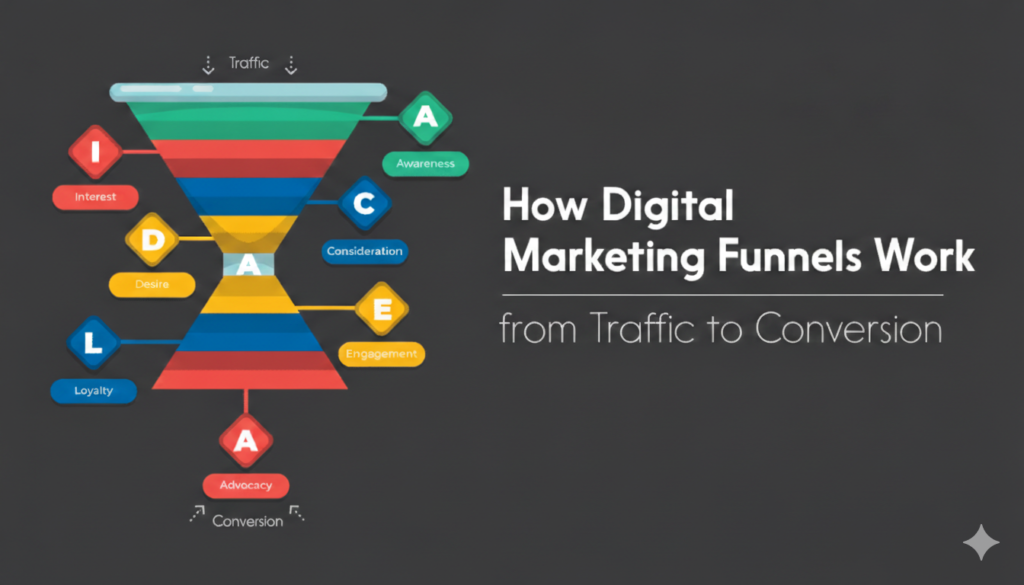
A digital marketing funnel is a structured framework that represents the customer journey. It shows how users move through different stages before becoming customers.
The funnel is called a “funnel” because:
- A large number of users enter at the top
- Only a smaller percentage convert at the bottom
Rather than expecting every visitor to convert immediately, a funnel focuses on guiding users step by step, building trust and relevance at each stage.
Why Digital Marketing Funnels Matter
Without a funnel, marketing efforts are often disconnected and ineffective. A well-structured funnel helps businesses:
- Understand user intent at different stages
- Deliver the right message at the right time
- Improve conversion rates
- Reduce wasted marketing spend
- Create consistent user experiences
From an SEO perspective, funnels also help align content with search intent, which is a critical ranking and engagement factor.
Digital Marketing Funnels and Google E-E-A-T
Google prioritises content that demonstrates Experience, Expertise, Authoritativeness, and Trustworthiness. Funnels naturally support these principles:
- Educational content shows expertise
- Helpful guidance reflects real experience
- Consistent branding builds authority
- Transparent messaging builds trust
A funnel-driven strategy creates content that genuinely helps users, which aligns with Google’s quality standards.
The Core Stages of a Digital Marketing Funnel
While funnel models can vary, most digital marketing funnels follow four main stages:
- Awareness (Traffic)
- Interest and Consideration
- Decision and Conversion
- Retention and Advocacy
Each stage plays a unique role in moving users closer to conversion.
Stage 1: Awareness – Driving the Right Traffic
The awareness stage is where users first discover your brand. At this point, they may not know who you are or what solution they need.
Goals of the Awareness Stage
- Attract relevant traffic
- Increase brand visibility
- Educate users about a problem or topic
The focus here is not selling, but visibility and education.
Traffic Sources in the Awareness Stage
Common traffic channels include:
- Organic search (SEO)
- Paid search and display ads
- Social media platforms
- Content marketing and blogs
- Referral traffic
From an SEO standpoint, this stage relies heavily on informational and top-of-funnel keywords.
Content That Works at This Stage
Effective awareness-stage content includes:
- Blog articles
- Educational guides
- Explainer videos
- Social media posts
The content should answer common questions, explain problems, and provide value without pushing for immediate conversion.
Stage 2: Interest and Consideration – Building Engagement
Once users are aware of your brand, the next stage is to keep them engaged and encourage deeper interaction.
Goals of the Consideration Stage
- Build trust and credibility
- Demonstrate expertise
- Help users evaluate solutions
Users at this stage are comparing options and seeking reliable information.
Content Strategies for This Stage
High-performing content includes:
- In-depth blog posts
- Case studies
- Comparison pages
- Email newsletters
- Webinars or downloadable resources
UX design and content clarity are critical here. If users struggle to find information, they will leave.
SEO and Consideration Content
This stage targets mid-funnel keywords, often problem-solving or solution-focused searches. Examples include:
- “Best digital marketing tools”
- “How to improve website conversions”
Providing clear, honest, and detailed information strengthens authority and engagement.
Stage 3: Decision and Conversion – Turning Visitors into Customers
The conversion stage is where users take action. This could include:
- Making a purchase
- Booking a consultation
- Filling out a lead form
- Signing up for a service
At this point, users need confidence and clarity.
What Users Need at the Conversion Stage
- Clear value proposition
- Simple and fast process
- Trust signals
- Strong calls to action
Any friction at this stage can cause users to abandon the process.
Key Conversion Elements
High-converting funnels typically include:
- Optimised landing pages
- Clear CTAs
- Testimonials and reviews
- Pricing transparency
- Secure checkout or form submission
From a UX and SEO perspective, page speed, mobile usability, and layout clarity are critical.
Stage 4: Retention and Advocacy – Beyond the First Conversion
Many businesses focus only on acquiring new customers, but retention is equally important.
Goals of the Retention Stage
- Encourage repeat purchases
- Build long-term relationships
- Increase customer lifetime value
Satisfied users are more likely to return, leave reviews, and recommend your brand.
Content and Strategies for Retention
Effective retention tactics include:
- Email follow-ups
- Educational resources
- Loyalty programs
- Customer support content
This stage strengthens trust and reinforces brand authority.
How Digital Marketing Funnels Improve SEO Performance
Funnels and SEO work best when they support each other.
Benefits for SEO
- Content aligned with search intent
- Improved user engagement metrics
- Lower bounce rates
- Higher dwell time
- Better internal linking structure
Search engines reward websites that provide clear, helpful journeys for users.
User Engagement and Funnel Performance
User engagement is a strong indicator of funnel effectiveness.
Engaged users are more likely to:
- Explore multiple pages
- Return to the website
- Convert over time
UI/UX design, content quality, and message consistency all influence engagement at every funnel stage.
Common Funnel Mistakes That Hurt Conversions
Many funnels fail due to avoidable issues:
- Driving traffic without a strategy
- Using the same message for all users
- Overloading users with information
- Ignoring mobile users
- Lacking trust signals
Fixing these issues often leads to immediate performance improvements.
Measuring Funnel Success
To optimise a digital marketing funnel, tracking performance is essential.
Key metrics include:
- Traffic sources
- Conversion rates
- Bounce rates
- Time on site
- Cost per acquisition
Data-driven decisions help refine each stage of the funnel.
How Experience and Trust Drive Conversions
Funnels that perform well are built on real user understanding.
Experience-based insights, clear expertise, and honest communication help users feel confident. This directly supports Google’s E-E-A-T guidelines and improves long-term results.
Final Thoughts
A digital marketing funnel is not just a marketing concept. It is a structured approach to guiding users from first interaction to meaningful action.
When implemented correctly, funnels:
- Improve user experience
- Increase engagement
- Strengthen SEO performance
- Drive consistent conversions
By understanding how digital marketing funnels work from traffic to conversion, businesses can move beyond random marketing efforts and build sustainable, scalable growth. Success comes from clear strategy, helpful content, and user-focused design, all working together within a well-defined funnel.
Getting traffic is easy. Converting it is where most businesses fall short. If your website isn’t guiding users from awareness to action, you’re leaving growth on the table. Contact me to build a data-driven digital marketing funnel that improves conversions, strengthens SEO, and supports long-term success.